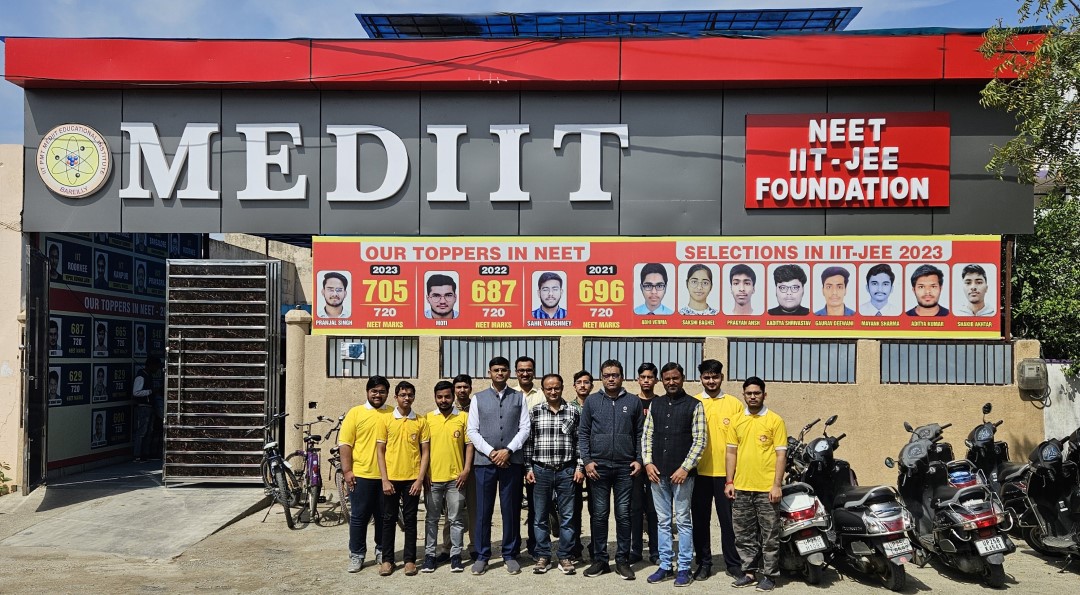
Get Admission in Top
IIT - Medical Colleges.


The JEE is one of the most challenging competitive entrance exams in India. Since the syllabus covers an extensive combination of Class 11 and Class 12 topics, success demands consistent effort, conceptual clarity, and regular practice. However, by following proven strategies, smart time management, and effective problem-solving techniques, cracking the JEE becomes a much more achievable goal.
Since JEE Main and Class 12 Board exams are usually scheduled close to each other, it is essential to prepare for both simultaneously. Selecting the right study material is crucial. Books such as NCERT and HC Verma focus on strong conceptual understanding and practical applications, which help students perform well in both Board exams and competitive entrance tests.
To be eligible for JEE Advanced, a candidate must:
Yes, absolutely. Clearing JEE Main alone can still secure admission into several prestigious institutions. Many top engineering colleges such as NITs, IIITs, and various reputed National and State engineering colleges offer BTech/BE admissions based on JEE Main scores.
It is common to confuse the two, but they are different:
JEE (Joint Entrance Examination): A national-level entrance exam conducted for students seeking admission to engineering colleges across India.
IIT (Indian Institute of Technology): Highly prestigious institutions where students study engineering after qualifying through the JEE process.
The NEET (UG) exam consists of 180 compulsory multiple-choice questions selected from a total of 200 questions across Physics, Chemistry, and Biology (Botany & Zoology).
The total marks are 720, and the exam duration is 3 hours and 20 minutes.
As per current National Medical Commission (NMC) guidelines, there is no upper age limit for NEET. Additionally, there is no restriction on the number of attempts. Candidates must only meet the minimum age requirement of 17 years by December 31 of the admission year.
Nearly 90–95% of Biology questions and a significant portion of Chemistry questions in NEET are directly based on NCERT textbooks. Thoroughly studying every line, diagram, and table in Class 11 and 12 NCERT books is essential for scoring 600+ marks in NEET.
Candidates must pass Physics, Chemistry, Biology/Biotechnology, and English individually. The minimum aggregate marks required in PCB are:
Yes. Indian citizens and Overseas Citizens of India (OCI) must qualify NEET to pursue MBBS or BDS abroad. The NEET result remains valid for three years for candidates seeking admission to foreign medical universities.
Yes, many students successfully clear NEET through disciplined self-study. A structured study plan, consistent revision, and regular practice with Mock Tests and Previous Year Question Papers (PYQs) are essential to adapt to the OMR-based exam format.
Pro Tip: Biology carries 50% of the total marks (360/720) and should be your strongest subject. However, Physics often acts as the rank-deciding factor, so focus on conceptual clarity and numerical practice.

If you want to prepare for IIT-JEE & NEET MEDIIT is the best choice you have.